

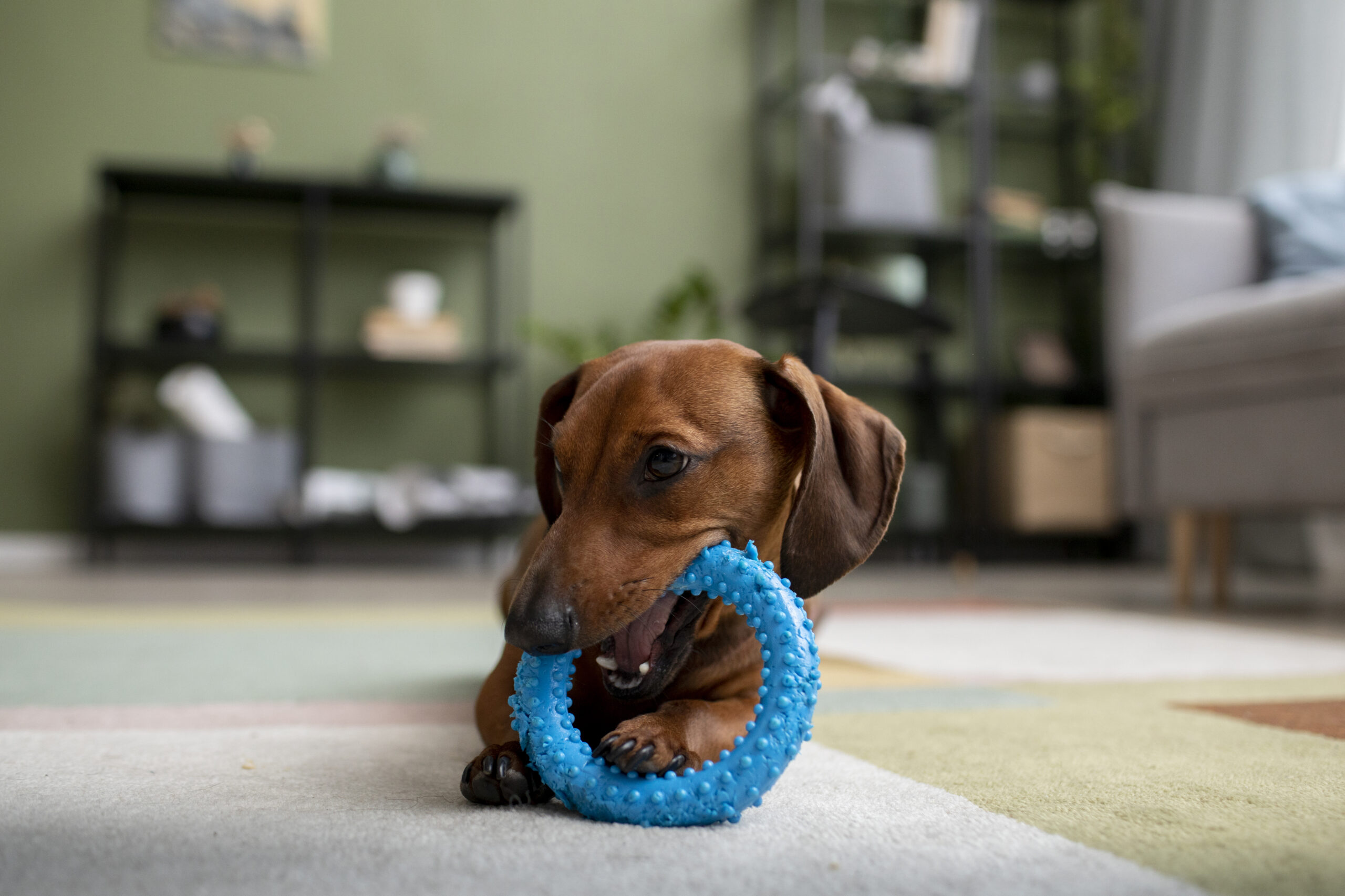
1. How Do You Choose the Right Dog Toys? Start with Age, Personality, and Play Needs
Dog toys are more than just a way to keep your furry friend entertained. They can also support natural behaviors such as exploring, sniffing, chewing, and interacting with people. Choosing appropriate toys can encourage daily activity and environmental enrichment, helping make your dog’s everyday life more engaging.
However, not every toy is suitable for every dog. Puppies, adult dogs, and senior dogs may have different needs. Dogs that love chewing, chasing, or solving puzzles may also benefit from different types of toys.
At Pawverse, we recommend considering three key factors when choosing dog toys:
- Age and developmental stage: Consider the needs of puppies, such as exploration and chewing, as well as the activity levels of senior dogs.
- Personality and play habits: Observe whether your dog enjoys chasing balls, chewing toys, sniffing, or solving puzzles.
- Purpose and safety: Consider whether the toy is designed for chewing, interactive play, sniffing, or independent play, and make sure its size and materials are appropriate for your dog.
Understanding these three factors can help you make more informed decisions when choosing toys for your furry companion.
2. What Toys Are Suitable for Dogs at Different Ages?
A dog’s activity level, chewing habits, and play preferences may change throughout life. In addition to age, consider your dog’s size, dental health, and individual behavior when selecting toys.
| Life Stage | Common Needs | Toys to Consider | What to Look For |
|---|---|---|---|
| Puppy stage | Exploring, mouthing, and developing play habits | Puppy-specific chew toys and soft interactive toys | Avoid excessively hard materials and small parts that could be swallowed |
| Adult stage | Physical activity, interactive play, and sniffing | Balls, tug toys, puzzle toys, and snuffle mats | Choose according to chewing strength, body size, and play style |
| Senior stage | Gentle activity, sniffing, and mental stimulation | Easy-to-use puzzle toys, treat-dispensing toys, and soft interactive toys | Consider dental health, joint mobility, vision, and activity levels |
1. Puppies: Start with Exploration and Safe Chewing
Puppies often explore their surroundings with their mouths, so it is important to provide toys that are appropriately sized and designed for their developmental stage.
Start with soft interactive toys or puppy-specific chew toys, and combine playtime with gentle interaction to help your puppy develop positive play habits.
Keep in mind that teething does not mean every hard toy is suitable. Excessively hard objects may damage teeth. Toys that break easily, can be swallowed, or may pose a choking hazard should also be avoided.
2. Adult Dogs: Choose Toys Based on Activity Levels and Play Habits
Adult dogs can enjoy a wider variety of toys, depending on their daily activities and individual preferences.
Dogs that love chasing may enjoy appropriately sized balls. Dogs that enjoy problem-solving may benefit from puzzle toys. Dogs that love chewing may enjoy chew toys suited to their bite strength and play habits.
Rotating toys can help introduce variety into your dog’s routine. Combine toys with walks, training, and interactive play rather than relying on toys alone to meet all your dog’s activity needs.
3. Senior Dogs: Prioritize Comfort and Ease of Use
Senior dogs do not necessarily need to stop playing. Instead, their activities should be adjusted according to their physical condition.
If your dog still enjoys exploring, try easy-level treat-dispensing toys or sniffing activities. If your dog has dental problems, joint issues, reduced vision, or limited mobility, choose toys that are easier to use and avoid games that require intense chasing or jumping.
If your dog suddenly loses interest in toys, shows signs of pain while chewing, or experiences a noticeable decline in activity, consult a veterinarian to check for potential health problems.
3. Choose Toys Based on Your Dog’s Personality: Chasers, Chewers, and Problem-Solvers
In addition to age, your dog’s personality and behavioral habits are important factors when choosing toys.
| Play Style | Common Behaviors | Recommended Toys | Play Tips |
|---|---|---|---|
| The Chaser | Loves chasing balls, running, and retrieving objects | Balls and toys designed for outdoor interactive play | Choose a safe play area and avoid excessive chasing or sudden stops |
| The Chewer | Enjoys gnawing and chewing objects | Chew toys with an appropriate firmness | Inspect toys regularly and prevent the ingestion of broken pieces |
| The Problem-Solver | Enjoys exploring, finding food, and working out challenges | Puzzle toys and treat-dispensing toys | Start with simple challenges to prevent frustration |
| The Sniffer | Enjoys sniffing the ground, following scents, and finding food | Snuffle mats and treat-hiding toys | Begin with simple scent games and keep toys clean |
| The Social Player | Loves playing with their owner | Tug toys and interactive balls | Establish clear start and stop cues during play |
| The Independent Explorer | Enjoys exploring independently when their owner is busy | Toys designed for independent use | Check the toy’s safety and observe whether your dog tends to destroy or swallow objects |
These categories are intended as a general guide. Dogs may enjoy several different play styles rather than fitting into just one category.
Observing your dog’s reactions and adjusting toy types and difficulty levels over time is often more useful than choosing toys based solely on breed or age.
4. Types of Dog Toys by Purpose: Chewing, Interactive Play, Sniffing, and Puzzles
If you are unsure where to start, choosing toys based on their intended purpose can make the process easier.
1. Chew Toys: Support Healthy Chewing Habits
Chewing is a common behavior among many dogs. Appropriate chew toys can provide an outlet for chewing and help redirect attention toward suitable objects.
Best for: Dogs that enjoy chewing and need appropriate opportunities for this natural behavior.
What to look for:
- Choose toys suited to your dog’s size, bite strength, and life stage.
- Avoid excessively hard toys and products that may splinter, break apart, or become choking hazards.
- Check regularly for cracks, missing pieces, or fragments that could be swallowed.
Important note: Chew toys do not replace toothbrushing or professional dental care. Using them does not guarantee protection against plaque buildup or dental calculus.
2. Interactive Toys: Make Playtime More Engaging
Balls, tug toys, and other interactive toys can help dogs and their owners build play routines, encourage movement, and strengthen their bond.
Best for: Dogs that enjoy playing with people, chasing objects, or retrieving toys.
What to look for:
- Choose balls that are too large to be swallowed whole.
- Avoid excessive force or vigorous shaking during tug games.
- Adjust playtime according to your dog’s stamina and physical condition.
The value of interactive toys goes beyond physical activity. Playing together can also help strengthen communication and trust between you and your dog.
3. Sniffing Toys: Let Your Dog Explore with Their Nose
Dogs have a highly developed sense of smell. Sniffing activities can provide opportunities for exploration and mental stimulation.
Products such as snuffle mats and treat-hiding toys encourage dogs to search for food or follow scents, making them useful additions to indoor enrichment activities.
Best for: Dogs that enjoy exploring scents, searching for treats, or engaging in varied indoor activities.
What to look for:
- Start with easy-to-find treats when introducing a new toy.
- Make sure fabrics, seams, and other components are unlikely to be chewed off and swallowed.
- Clean toys according to the manufacturer’s instructions and allow them to dry completely after use.
4. Puzzle Toys: Encourage Problem-Solving Through Play
Puzzle toys often require dogs to push, move, or manipulate objects to access a reward. These activities can add variety to a dog’s daily routine.
Best for: Dogs that enjoy exploring, are motivated by food, or become bored with repetitive activities.
What to look for:
- Choose a difficulty level that matches your dog’s experience.
- Demonstrate how the toy works during the first few sessions.
- Use an appropriate portion of your dog’s regular food as a reward, and account for it in their daily food intake.
Puzzle toys do not need to be difficult to be beneficial. The best starting point is a challenge your dog can successfully complete while remaining interested and engaged.
5. Five Important Safety Details to Consider When Choosing Dog Toys
Appearance, price, and functionality are important, but safety should always come first.
1. Is the Toy the Right Size?
A toy that is too small may be swallowed or become lodged in your dog’s throat. A toy that is too large or heavy may be difficult for smaller dogs to handle.
2. Is the Material Suitable for Your Dog’s Chewing Strength?
Dogs have different bite strengths and chewing styles. No single material is suitable for every dog, so consider the product instructions and observe how your dog uses the toy.
3. Does the Toy Have Small Parts That Could Come Loose?
Bells, plastic decorations, rope knots, and other components should be checked to make sure they are not easily chewed off or swallowed.
4. Does the Toy Require Supervision?
Balls, tug toys, and toys that can be easily damaged may require supervised play. Do not assume that a toy is safe for unsupervised use simply because it is marketed for pets.
5. Is the Toy Clean and in Good Condition?
If a toy develops cracks, becomes damaged, develops an unusual odor, or accumulates dirt that cannot be adequately removed, stop using it and replace it when necessary.
If your dog has a history of swallowing foreign objects or quickly destroying toys, supervise play closely and consult a veterinarian about appropriate safety precautions.
6. Pawverse Buying Tips: Start with Your Dog’s Everyday Habits
At Pawverse, we believe that choosing the right pet products is about more than making a purchase. The best products should fit naturally into your pet’s everyday life.
Before choosing a toy, consider these three questions:
- What does your dog enjoy most? Chasing, chewing, sniffing, or interacting with people?
- What does your dog need right now? More indoor activities, opportunities to explore, or gentler play options for their senior years?
- Is the toy safe for your dog? Are its size, materials, durability, and intended use appropriate for your dog’s individual needs?
You do not need to buy lots of toys at once. Start with one or two suitable options, observe how your dog responds, and gradually introduce other types as needed.
At Pawverse, we aim to help pet parents make more informed everyday choices, making caring for their furry companions more rewarding and enjoyable.
7. Frequently Asked Questions About Dog Toys
Q1: At What Age Can Puppies Start Playing with Toys?
Puppies can be introduced to safe, age-appropriate toys when they join their new homes, provided the toys suit their developmental stage and body size.
Start with easy-to-use products that are appropriately sized and unlikely to break apart. Supervise your puppy and observe how they interact with each toy.
Q2: How Often Should Dog Toys Be Replaced?
There is no single replacement schedule that applies to every toy. Inspect toys regularly for cracks, damage, loose parts, and other potential safety issues. Stop using a toy if it becomes damaged, and replace it when necessary.
Q3: Can Dogs Play with Toys Alone at Home?
It depends on the toy’s design, your dog’s chewing habits, and their tendency to destroy objects.
Dogs that frequently swallow foreign objects or quickly damage toys should not be left unsupervised with them. Even toys designed for independent play should first be tested under supervision to ensure they are suitable for your dog.
Q4: What Is the Difference Between a Snuffle Mat and a Puzzle Toy?
A snuffle mat primarily encourages dogs to use their noses to find hidden food. Puzzle toys may require additional actions, such as pushing, moving, or manipulating components to access a reward.
The two categories can overlap. Choose according to your dog’s interests and ability to interact with the toy.
Q5: Can Toys Help Dogs with Separation Anxiety?
Toys may provide enrichment and short periods of engagement, but they cannot guarantee improvement in separation anxiety.
If your dog consistently barks, destroys objects, drools excessively, or shows other significant signs of distress when left alone, consult a veterinarian or a qualified animal behavior professional to determine whether additional support is needed.
Q6: How Long Should a Dog Play Each Day?
There is no fixed daily playtime that suits every dog. The appropriate duration depends on age, size, health, physical ability, and play style.
Start with short sessions and observe your dog’s interest and physical responses. Adjust the duration if your dog appears tired or uncomfortable.
Conclusion: Choosing the Right Toy Starts with Understanding Your Dog
There is no single perfect toy for every dog. Age, personality, play habits, and safety considerations all play a role in finding the right match.
By observing your dog’s everyday behavior and combining suitable toys with appropriate interaction, you can make playtime a more meaningful part of their routine.
Pawverse | Thoughtful Choices for a Happier Life with Your Pet.
Leave a Reply